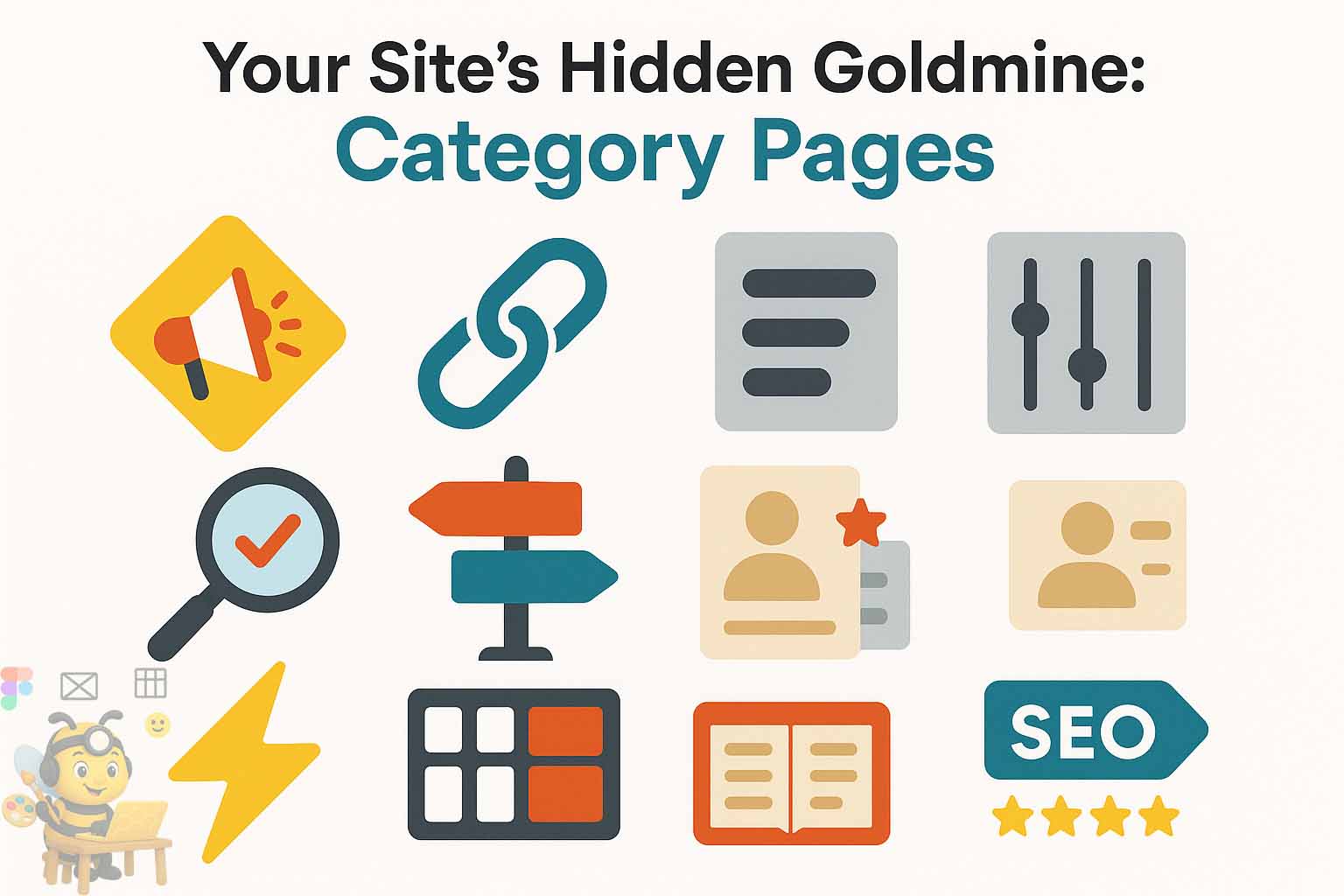
Your Site’s Hidden Goldmine: Category Pages
Alright, let’s have a real chat about your e-commerce site. We all spend so much time obsessing over our product pages, right? Polishing every photo, perfecting every description. But what if I told you that your site’s true superstars might be the pages you’ve been overlooking?
I’m talking about your category pages. They aren’t just boring product galleries; they are buzzing hubs that guide real people through your store. A weak category page is like a confusing maze, but a great one is like a friendly guide leading customers straight to the checkout. Here’s how to make yours amazing.
1
Build a Road to Your New Products
Think about it: you launch an awesome new product. Hooray! The problem? Right now, it’s like a beautiful new house built in a field with no roads leading to it. By adding a simple link from its main category page, you’re paving that first essential road. It’s a clear signal to Google that says, “Hey! Look at this new, important thing!”
2
Share the Link Love
Imagine your homepage is the most popular kid in school. When it links to another page, it’s like a public endorsement, giving that page an instant credibility boost. Your popular category pages have that same power. Use them to strategically link to other important pages you want to lift up. It strengthens your whole site.
3
Make Filtering Fun (and Smart!)
We’ve all been there—scrolling endlessly for a “medium blue t-shirt.” It’s exhausting! Good filters are a gift to your shoppers. But here’s the secret SEO bonus: they can create unique pages like .../shirts/blue/medium. These pages are pure gold for catching shoppers who know exactly what they want.
4
Be a Demand Detective
Put on your detective hat. 🕵️ Your site’s structure isn’t set in stone; it should evolve. Dig into keyword research and see how real people are searching. You might discover thousands are looking for “eco-friendly yoga mats.” If you sell them but don’t have that category, you’re missing out! Create the page they’re looking for.
5
Use Obvious Visual Signposts
You know those big, friendly, clickable pictures at the top of a category page? The ones for “Sneakers,” “Boots,” etc.? Those are tile links, and they’re brilliant. They’re basically giant, welcoming signposts for both your shoppers and Google, making your site’s layout crystal clear. It’s a simple win.
6
Get a Little Fancy
Once you’ve nailed the basics, you can try some really cool stuff. Personalization is a great example. It just means showing people more of what they like. If someone keeps looking at Brand X, why not gently rearrange the page to show them Brand X first on their next visit? It feels personal and can really help sales.
7
Speed is everything. No, really.
Let’s be honest: patience is a rare virtue online. A website that takes more than a few seconds to load is a sales killer. People will just leave. The fix is usually straightforward: squash your big image files down and use good hosting. A speedy site feels professional and keeps people around. ⚡
8
Be More Than Just a Grid of Products
Why not add a little helpful advice? That space at the bottom of the page is a golden opportunity to connect with your customer. A mini-guide on “How to Choose the Right Running Shoe” on your running shoe page shows you care and gives Google more rich, relevant text to rank.
9
Make Your First Impression Count
On a crowded Google page, your title and description are everything. It’s your handshake, your elevator pitch. You have about three seconds to convince a searcher that your page has the answers. Make it clear, compelling, and human. A great pitch gets more clicks, and Google pays attention to that.
10
Give Google Some Extra Hints
That fancy term “structured data” is simpler than it sounds. It’s like adding little info labels to your page that only search engines can read. You can label things like price ranges or review scores. Why? Because Google might use those labels to give your listing some extra flair in the search results, like star ratings right under your link. It helps you stand out!
11
A Great Website Is Never ‘Done’
Finally, remember that your website is like a garden, not a statue. It needs constant tending. Don’t think of it as a chore; think of it as tinkering! Peek at your analytics, see what people are responding to, and don’t be afraid to experiment. This ongoing curiosity is the real secret to staying ahead.
Category Page SEO Quiz
Test your knowledge on improving your website's category pages to get more visitors from search engines.