
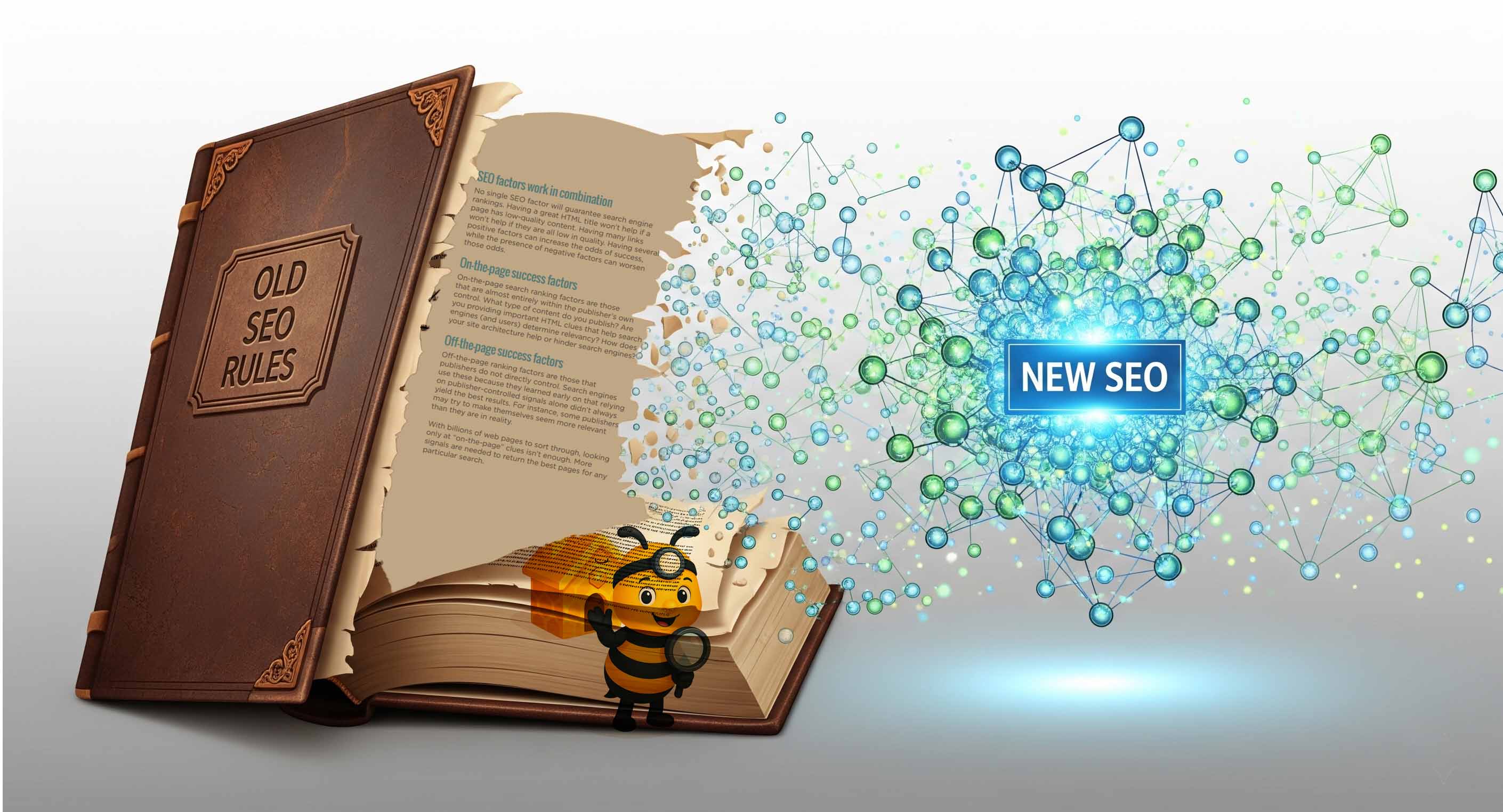
Old SEO is Not New SEO
From Ranking to Being Retrieved, Cited, and Trusted
The Old Way: Built for Bots
For years, SEO had one goal: hit page one of Google. That era rewarded pages stuffed with keywords, high volumes of links, and quick traffic tactics that generated clicks but offered little real value. The strategy was simple: Stuff Keywords, Every Link Counts, Operate for Bots.
This method worked for a time, but it had major flaws like fragile results, low-value traffic, and poor user experience. Crucially, content was not structured to be cited by new AI tools.
The New Way: Built for People, Ready for AI
Today’s approach puts people first while being ready for AI. Instead of focusing only on ranking, you should prepare your content to be retrieved by models like Gemini, cited in AI summaries, and trusted by users and algorithms. This new model can be broken down into four parts:
- GEO (Generative Engine Optimization): Structure content to be found and quoted by AI.
- AEO (Answer Engine Optimization): Format content for answer boxes and voice search.
- AIO (AI Integration Optimization): Build content that can be used by other tools and APIs.
- SXO (Search Experience Optimization): Make your website helpful and easy to use.
Practical Steps for the New SEO Era
1
Structure for Answers: Add “Too Long; Did not Read” (TLDR) summaries at the top of articles and use schema for FAQs and How-To guides.
2
Create Evidence and Citations: Back up claims with data, case studies, and clear references. AI systems prefer citing trustworthy sources.
3
Make Content Machine Usable: Provide structured data tables and downloadable CSVs. Make your information portable for other systems.
4
Prioritize User Experience and Speed: A fast, mobile-friendly site is non-negotiable for better user outcomes and AI recommendations.
5
Prepare for Multi-Modal Search: Use high-quality images with descriptive alt text and videos with transcripts to appear in visual searches.
6
Blend AI with Human Oversight: Use AI to scale research and drafting, but always apply human quality control for accuracy and trustworthiness.
The New Finish Line: From Retrieval to Conversion
Retrieval, then Citation, then Trust, then Conversion
New SEO Readiness Quiz
Check how ready your website is for the new era of search.